ACARP
Accra Compost and Recycling Plant
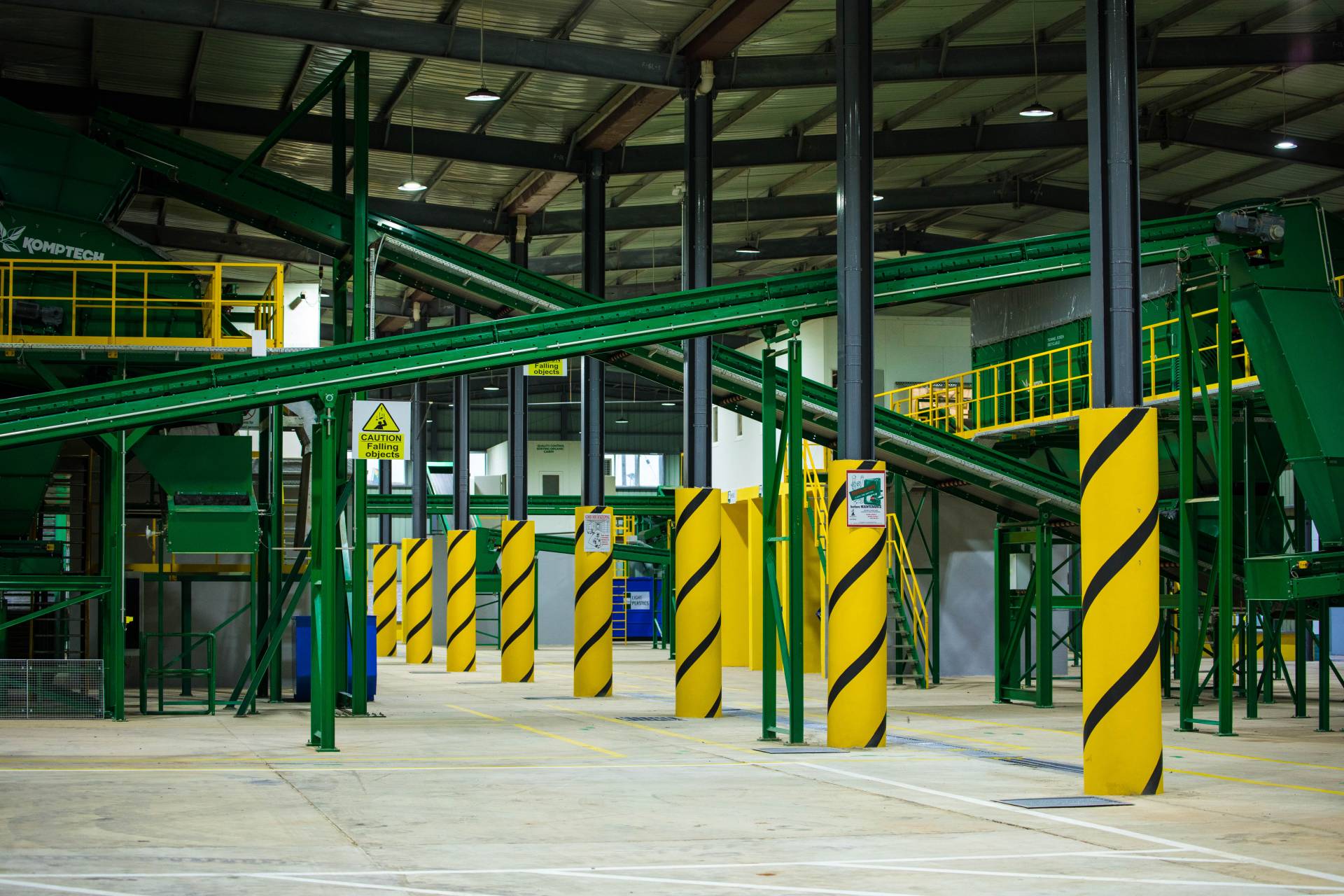
Municipal solid-waste processing infrastructure with an approved capacity of 1,200 tonnes per day.
Municipal solid waste


Transforming waste streams into useful resources through recovery, recycling, biological treatment and modern processing infrastructure.
Processing / Circular Economy
A connected processing network advancing the transition from conventional waste disposal to resource recovery.
The Processing / Circular Economy sector brings together material recovery, recycling, biological treatment and modern waste-processing infrastructure.
Across municipal solid waste, liquid waste and specialised streams, its purpose is clear: recover viable materials, transform them and return them to productive use.
Circular value chain
Recovery connects waste management to a new cycle of material use—moving viable resources beyond disposal and back into production.
Waste streams and recyclable materials enter appropriate recovery and treatment systems.
Materials are sorted, recycled, composted or converted using appropriate processing technologies.
Recovered material becomes useful products and secondary raw materials.
Outputs such as compost, RDF, paper, PET and pelletized plastics re-enter productive use.
Processing infrastructure
Major facilities combine municipal solid-waste processing, regional recycling and composting, and liquid-waste treatment.
ACARP
Municipal solid-waste processing infrastructure with an approved capacity of 1,200 tonnes per day.
Municipal solid waste
KCARP
Municipal solid-waste processing infrastructure with an approved capacity of 1,200 tonnes per day.
Municipal solid waste
IRECOP
A distributed processing footprint designed around a plant in each of Ghana’s 16 regions.
Regional processing network
SSGL
Dedicated infrastructure supporting the treatment of liquid-waste streams.
Liquid waste
1,200
Tonnes/day ACARP processing capacity
1,200
Tonnes/day KCARP processing capacity
16
Regions in the IRECOP footprint
Recovered outputs
Recoverable waste is transformed into products and secondary materials that can return to productive use.
Processing capabilities
Sorting and recovery systems direct recyclable materials toward productive reuse.
Organic waste streams are processed into compost and liquid fertiliser outputs.
Liquid- and medical-waste treatment infrastructure supports appropriate handling of distinct waste streams.
Waste transfer infrastructure and landfill technologies complete the wider processing network.
Sustainability contribution
Resource recovery, recycling and composting help keep viable materials in use while supporting climate adaptation and mitigation.
Partner with us
Work with Jospong Group to advance resource recovery, recycling and circular-economy infrastructure.